Hello 2nd graders! Soon enough you will

become experts on the world of economics. Let's learn about money, goods and

services in your community, and some special features that make your home unique

and different from other places in Indiana! Let's go!


Sunday, October 10, 2010

Producers and Consumers

Did you know that there are two important roles that people play in our economy? One of those roles is that of producers. A producer is someone who creates something of economic value: goods and services. The other role is as a consumer. A consumer is a person or organization that uses a good or a service. If there are no consumers, the producers are doing their work for nothing, and if there are no producers, there's nothing for people to consume. We need both consumers and producers for our economy to run. People are also be both producers and consumers in their everyday lives.

How can people be both producers and consumers? Well, let's look at an example right here in our own town: The South Bend Chocolate Company. The people who work at the South Bend Chocolate Company produce the chocolates, hot drinks, and other yummy things that we like to eat. While they are working at the Company producing those things, they are paid for their work. Then, they take that pay home, where they use it to buy groceries, clothes, and the other things they need. Because they are buying things, that makes them consumers.

YOU are also a consumer! When you use your allowance or maybe money that you have earned somehow to buy ice cream, or candy, or a toy that you want, you are consuming something that has been produced. At the same time, if during the summer you like to set up a lemonade stand, and make lemonade to sell, then you are being a producer too.

Here is a fun game where you can put into practice some of the things you've learned on this blog by running your own lemonade stand.

Jobs In Your Town

Have you ever driven through your town and seen men and women working? These people work for the many departments in that town. Some of these departments include: the street, water, and electric. The people in these departments are trained to do exactly what needs to be done in their town.

The street department takes care of the roads and how they appear. They pick up the litter along side of the roads and keep the grass mowed so that they look nice. They also fill in all of the pot holes, lift and replace the manhole and stone drain covers, climb down the manholes, and operate many different machines and vehicles. They work long hours either sitting or standing all day.

The water department designs and plans how the water and sewer systems will be placed in a town. They install and maintain these systems. They also plan surveys and approve what water and sewer system will work for a subdivision or land lot. Another thing these workers do is help develop computer models for their water and sewer systems.

Electric Department workers install and maintain the electrical work that needs to be done in a town. They also make sure that the town has the electric it needs to run a business and have lights and other electrical devices in peoples homes. They work many different hours; which makes for long days. These men and women are specially trained to work with and maintain the electrical systems.

These men and women are very hard workers. They work many long days and are trained in their specific departments. They keep the towns roads safe and nice, make sure there is a water and sewer supply, and provide the electric that a town needs.

Monday, October 4, 2010

What can saving do for you??

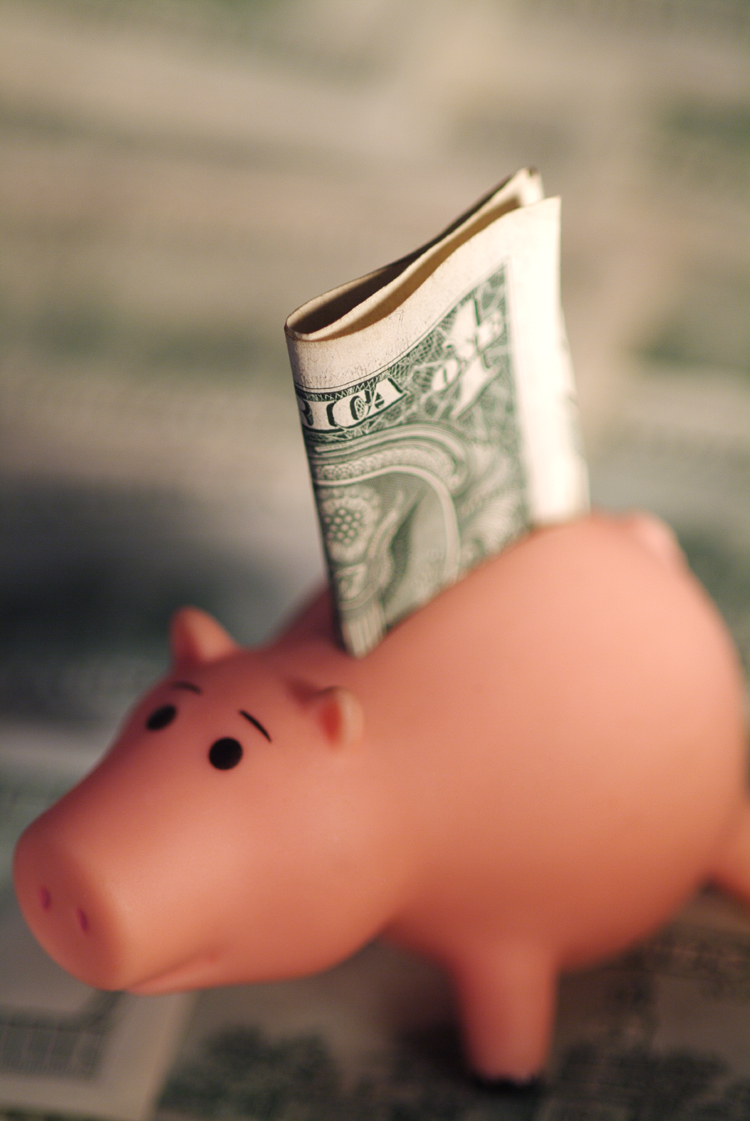
I remember my first piggy bank.  It was a big pink pig with a small slit at the top.  I remember getting frustrated when I was younger because once I put the money inside Mr. Piggy, there was no way to get the money out.  My mom always looked at me and said, "You are learning to SAVE your money."  Then, I didn't really understand why it was so important!! But now I realize all the cool stuff you can do if you save your money.

The most common type of bank account is a savings account.  A savings account is often the first bank account people have.  Many parents open up savings accounts for their children so they can learn the importance of saving money for the future.  Money that is kept in a savings account is also kept very safe.  Even if accidents happen such as a fire or even if the bank goes out of business, your money is STILL there.  You can't get any safer than that!

So this is how savings accounts work.  Unlike Mr. Piggy, you are able to take money out of your savings account.  However, once you put your money into the savings account you can leave it there! If you leave it there, the bank will give you interest on your money.  Interest is money that the bank gives YOU. Now this gets kind of tricky.  You will learn more about interest later.  For now, let's think about interest as a reward that the bank gives you for keeping your money with that bank for a long time. 

Now students, emergencies happen! Dad's car can get a flat tire, the refrigerator can stop keeping food cold, Jet the golden retriever may need to go to the vet, or baby brother Billy may need to go the doctor.  All of these things cost money.  But if money has been saved for a long time, these situations will be easier to handle. 

Try talking to your parents about opening a savings account.  See what they say! They might tell you that Mr. Piggy is doing a fine job.  But tell them you want to learn about interest, making deposits (putting money in the bank), and withdrawing money (taking money out of the bank.)  These big words will show them that you are really interested in learning how to save money!

Things you can think about saving up for:
  • A toy you have been wanting
  • An iPod to listen to when your big brother is hogging the radio
  • A gift to give someone else less fortunate
  • Help your parents send you to COLLEGE!!!
As you can see, saving money is very important! You can do all sorts of things with money that you have saved up. 

Now take a look at this video.  If you saved $7.50 a week, think about what you could buy.  Or how much money you could save in 2 years! How much money could you save by the time you turned 16 years old?  See how quickly money GROWS when you put it away to be saved! With a little patience and hard work, you could end up with a lots of money in your savings account.

Watch this video:
http://www.youtube.com/watch?v=A-kj7CnbLeo

Money, Money, Money

Hi! My name is Bryce Buck. And I am here today to talk to YOU about money and where money comes from!  Everyday people use money.  Money touches the hands of many people in one day alone! I have traveled many places and have seen the inside of lots of pockets and wallets.  Why is it that money is so popular? Everyone wants it, everyone works REALLY hard for it, and people think about it all the time.  It makes me feel pretty special though! Money is used to buy goods and servicesGoods are things that people can buy and purchase at a stores.  Services are when somebody pays a person for their time.  When a plumber comes to your home to fix the kitchen sink, this is an example of a service.

So where did money come from you ask? Well! This is quite the adventure.  Have you ever traded anything with your friends?  Maybe some baseball cards?  Or maybe you and your friend switched sandwiches at lunch! This is how money worked a long time ago.  People bartered or traded with one another when they needed  or wanted something.  However, in order for people to trade or barter, they needed to find something that the other person would find valuable.  If you really wanted Suzie's iPod, offering her your Snickers candy bar would be an example of an unfair trade.  The candy bar is most likely not going to be worth much to Suzie.  People stopped using this type of money because it got very confusing and difficult!

Take a look at this!  Let's pretend that you are a very famous carrot farmer.  You have acres and acres of carrots that are a beautiful orange and very tasty.  However, you would really like some chocolate.  In order to make this trade happen, you would need to search and search until you found someone that had chocolate AND wanted carrots.  This got to be quite exhausting for the people that were trading.

Because people got sick and tired of trading all the time, money started to change.  Some of the first people that lived in the United States used money that is different from the money we use today.  What makes money valuable is how badly people want it! When people first came to the United States, they wanted food and things to keep them warm.  At this time, people used dried corn and beaver pelts (or skins) for money. 


At one time, people even used gold for money! But that became very hard to find. 

Now what about me! How did we start using money that looks like me?  Today we have what we call bills or paper money.  We also have coins such as the penny, nickle, dime, and quarter. 

Our country is a very strong and powerful country! And that is just how money works! It all depends on how important money is to the people.  The United States sells lots and lots of goods to other countries.  Because we are so successful, our money and our economy is considered to be one of the strongest in the world!  However, if we were to have lots and lots of dollar bills made, money would lose some of it's value.  If President Obama announced tomorrow that every single student in our school was going to recieve 100 dollar bills, that $100 wouldn't seem like a lot of money anymore because EVERYONE got it.  Another example of this is if everyone was given the coolest, fastest, prettiest car ever made, then it wouldn't be the coolest car anymore because EVERYONE had one.  Does this make sense?

Lastly, I bet you are wondering where I come from.  Or if money is printed off, where does this happen?  Well, money is made and printed at a place called the Central BankHere, they decide how much money is in circulation or going around from person to person within the United States.  If the Central Bank thinsk we need more money, they print it. 


Well, don't forget me! I'm Bryce Buck and I hope you learned something new today about the money that you and your parents use each and everyday! It's with money that we are able to buy the things that we need and want.  It's important to save your money and be smart with it! You are basically an expert now! Keep up the good work!

How Do We Get Our Bread?

Do you ever wonder how we get things? The things we buy have to come from somewhere. Food doesn't just magically appear on the shelves of the grocery store, clothes don't sew themselves out of nothing, and toys aren't just wished into shape, as much as we might like them to be. Each of those things take something called resourcesto become what they are.

A resource is an available source of wealth that can be accessed when it's needed. Wealth isn't just the paper or coin money that you have in your pocket. It is also other things that have value to a person or community. There are three main types of resources that we rely on: human resources, natural resources, and capital resources. Human resources are the people who are part of making things and providing services. Natural resources are the resources that we get from the earth. Capital resources are the ways that we get money to make things.

Let's think of things in terms of our local grocery store. Have you ever wondered what it takes for us to get bread from the bakery? There's a lot that goes into the process that puts the bread, cakes, and donuts that we like so much on the shelves. Each step needs the help of each of the three resources before we can have our finished result.

Before we can ever have our bread, we have to have the grain, eggs, sugar, and other things to make it with. These things are all natural resources, things that come from the earth. But in order to make the grain grow properly, and make sure that the eggs are collected, we have to have the farmers who grow the grain and care for the chickens. These people are human resources. The farmers also need the farm machinery, seeds, and chickens so that we can have the grain and eggs, and to get these things, they need money. That money is the capital resource that they are using.

The bakery obviously needs the natural resources of the grain, eggs, and other ingredients to make our bread. It also needs the human resources of the bakers who put those ingredients together to make the bread. But before any of that can be done, the bakery needs the capital resources to work in the first place. If there is no money backing up the bakery, and buying the equipment and ingredients, and hiring the people who make the bread, then there would be no bakery.

This same process is involved in any of the things that you are used to buying and using every day. Your toys need human, natural, and capital resources to be put together, and your clothes need all of those things as well. All of these are used together to make the things that we use, and without one type of resource, we would have a hard time getting things.

Sunday, October 3, 2010

Specialized Jobs in the Community

Teachers, School nurses, and Firefighters are all examples of people in the community that we sometimes take for granted. We don't think about all that they do for us everyday. From teaching our children, making sure that when they don't feel good they have someone to take care of them, to protecting us from fires and many other things, these people do a lot for everyone around them.

Teachers dedicate their days to teaching our children everything they need to know to get their education. They spend a lot of time planning activites and assignments for the students to work on in and out of class. Some people don't realize how much time teachers actually spend working on things for school.

School nurses also spend their days at the schools making sure that the students are taken care of if they don't feel good. They also take care of the students injuries and other physical and mental illnesses. In addition to taking care of the students, school nurses also take care of the staff members when needed.

Firefighters protect people and properties from fires. They are the first responders to many different accidents and fires in the community. There are also many specific jobs within the fire department, such as tillers, hose operators, and pump operators. Tillers guide the part part on the fire truck that holds the long ladders. Hose operators connect the hose to the fire hydrants, then the pump operators make sure that the water gets from the hydrants through the hose to put out the fire.

All of these people in the community help others and don't get the thanks that they deserve. We often take them for granted and don't think about all that they do for us everyday. They work really hard to make sure that we get the education we deserve, the help when we get hurt or sick, and the protection we need from fires. So let's try to take time to remember these people and thank them for all that they do!

The Day in the Life of a Paperboy

There have been times in all of our young lives that we have wanted something.  Maybe a cool toy, a brand new shirt, a trip to Disney World, or chocolate milk from the grocery store.  However, all the wanting and wishing usually ends up with Mom or Dad saying, "You're going to have to save up your money!" Ughhh. The answer that seems so boring, so routine, SO HARD! Why can't parents just hand over the money and all problems would be solved?  Let's take a look at Timmy and his morning routine.  Timmy has been wanting a new bike for over a year now.  And his parents have given him the same answer that all us kids dread, "Save up your money, Timmy.  It will be a good life lesson if you could buy a new bike with your own money."  Together, we can learn how to buy, turn around and sell for what we call a profit, and save money so that we can someday buy that THING that we have been wanting and wanting!

Timmy is a twelve year old boy from Savesalot, Minnesota. Timmy's bike was passed down to him by his older sister Jenny.  The spokes are rusty, the bell doesn't ding, and the pink writing on the bike is just embarrassing.  After asking his parents for money, Timmy is told that he has to use his OWN money if he wants to buy a new bike.  "But I don't have any money!" Timmy shouts.  Looks like Timmy needs to get a job. But what can he do?

Timmy decides to start his own newspaper delivery route.  He calls the local newspaper, the Savesalot Gazette, and they told him they could sell him the papers in bulk for $0.10 a paper.  Timmy rides his bike to pick up his first set of newspapers to be delivered.  Timmy decides he is going to turn around and sell the newspapers for $0.25 cents.  He will pass out the papers Monday-Saturday and pick up the money from everyone on his route on Friday afternoons.  Timmy has 37 houses on his route.  He pulls out a notepad and a pencil and does the math.  Each day it will cost him $3.70 to deliver the papers.  But if he sells them for $0.25, that equals $9.25.  So he will end up making a profit of $5.55.  A profit is what you earn after you subtract what you bought from what you made.  If Timmy delivers papers 6 days of the week, and he makes $5.55 every day, he will make $33.30 in a week!! Wow!! That's a lot of money for a twelve year old to be making in one week.

Timmy does some research online.  The bike he wants is called the Speedy 500.  The total cost for the bike is $356.97.  Timmy pulls out his paper and pencil again. Lets see how long this will take! After doing the math, Timmy realizes that in 11 weeks, he will be able to buy his very own bike! But that means that he has to put all of his money away at the end of each week.  If he decides to spend some along the way, it will take even longer until he gets his Speedy 500. 

After the first week, Timmy is quite exhausted.  Every morning he wakes up at 4:30 AM, eats a big bowl of cereal, bags all his newspapers, hops on his rickety old bike with pink lettering, and drives his route of 37 houses.  He gets chased by dogs, splashed by angry vehicles that are not wanting to be up at 6:00 in the morning, and rained and poured on.  But Timmy pushes through.  He makes a box out of cardboard and writes on the outside, "Speedy 500 Savings Account."  After each week, he collects all his money and puts it inside the box, promising to never sneak into the box before the 11 weeks are up! After 11 weeks, Timmy is able to buy his brand new bike!! He buys a red one with big tires, a bell that rings loudly, and BLUE letters.  Timmy realizes that making money and saving money isn't that hard afterall!! Now he is saving up for a brand new car.  He only has 312 weeks to go!